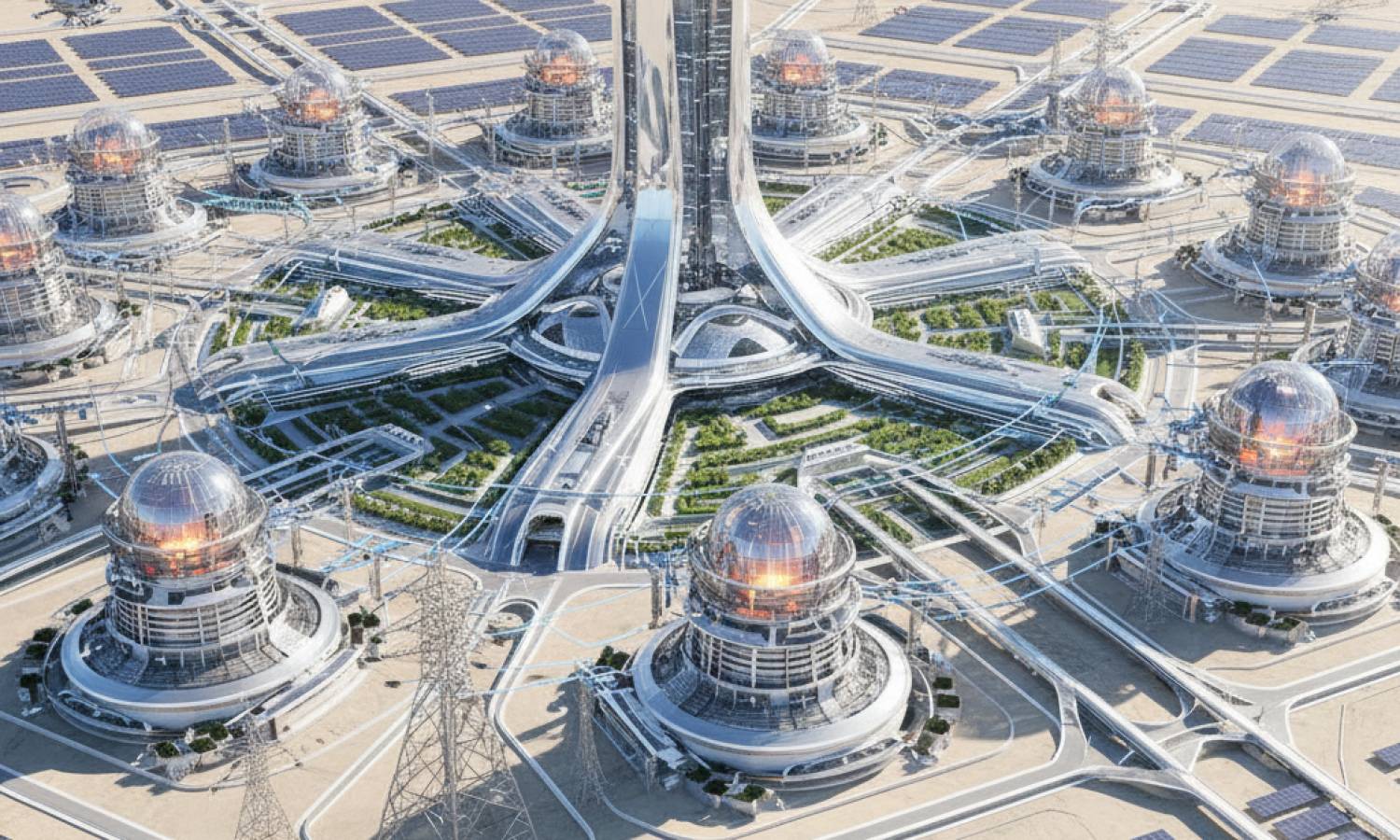
Data Center Boom Reveals Power as the Real Bottleneck for AI Infrastructure
Although inventory for data centers around the world has increased by 25% within the last year, global demand for AI computing power is putting pressure on the available data center spaces around the globe. Vacancy rates have dropped from 8.3% to 6.7% within the last 12 months and despite the high increase of new builds within the last year, data center supply seems to be struggling to keep up with the demand for spaces that can handle increased AI workloads.
Data center capacity is being built out in Northern Virginia, Dallas-Fort Worth, and in the Midwest particularly in the Chicago area. Together these markets have added almost 2 GW of capacity in the last year, with vacancy rates near historic lows. The largest vacancy rate is 6.7% which is down 2.6 percentage points from the same time last year. The vacancy rate in Northern Virginia is at an all time low of 0.3%.
The data center squeeze is a global phenomenon and not limited to the U.S. In Latin America, for example, the leasing activity spiked in the last year, reaching 90% increase in Europe compared to Q1 2025. In Asia-Pacific, the available capacity halved in the last year to only 248 MW, with large spaces of 5,000 sqm+ disappearing fast from the market in key data center hubs such as Singapore.
Market woes do not appear to extend to the under-construction pipeline in key US data centers, however. There are very few speculative developments currently under construction across the key US data centers and very few of these still remain available for lease or purchase. Indeed, Delve said it had been unable to confirm any but 20MW of the circa 80% already preleased back in the end of 2025 at some of the major data centers around the country. As noted above, an investment in a space in a data center currently under construction would also have the related risks of any significant changes in the technological environment prior to completion.
Power constraints typically pose the greatest challenge for the data center industry. Here we see power constraint play out across multiple countries and geographies. Utility approval processes, the ability to perform grid upgrades and changes, transmission constraints (e.g. Chicago) and other power infrastructure related constraints create significant road blocks for growth of supply across multiple markets such as Northern Virginia, London and other top Data Center Markets. Many believe these constraints could impact supply growth for several years to come.
As space continues to be tightly leased, rental rates are appreciating significantly. Chicago now commands $200-$230 per kW/month, up 15% year over year. This represents appreciating rental rates by landlords of space that are seeing very limited turnover.
But, this focus on power as a limiting factor also brings out a number of regional risks that could impact the return on investment in the coming decade, particularly in areas where the local power infrastructure is not able to keep pace with rapid growth in data center demand.
Moreover, regions like Dubai can also be worth watching given Dubai’s emergence as a regional hub for technology and for conducting business, globally. As global data trends and other associated investment flows and corresponding increases in asset values in data centers also impact on the flows of investors into real estate, similar challenges for power and other physical and related (e.g. in respect of required upgrades to associated infrastructure) bottlenecks to growing supply in US markets are likely to also apply in Dubai.
Practical Takeaways for Buyers & Investors:
- Data center investment in areas with planned grid expansion is better than in areas with no progress regarding power supply.
- Find out the level of prelease activity going on at any new development you are considering, i.e. as a % of the total projected spec inventory. The figure of 80% prelease at the end of 2025 for most development under construction in the US’s top hubs is worrying for a variety of reasons.
- For tech companies looking to lease, in markets with supply of powered space under constraint it is wise to secure a suitable lease up a couple of years in advance to avoid being left without an alternative.
- Watch rental rates – though they may signal shortage, they will put pressure on operating margin as well.
Rethinking the Tech Real Estate Cycle:
The future of Tech Real Estate — with AI demanding digital infrastructure of unprecedented scale — will depend increasingly on access to reliable power. In fact, power may become the single most valuable asset in town, potentially transforming the cycle of Tech Real Estate investing from a battle for space to a fight for control of the grid and the city’s energy policy.