How Dubai’s Infrastructure Boom Is Shaping Property Prices in 2026
A host of high profile infrastructure projects, scheduled for completion in 2026, are driving property growth in various parts of the city. By way of example, a comparison of growth rates across key districts across the city indicates that a host of properties located close to new underground metro stations, upgraded main roads, and recently launched high profile waterfront development schemes are increasing in value at rates greater than the market as a whole.
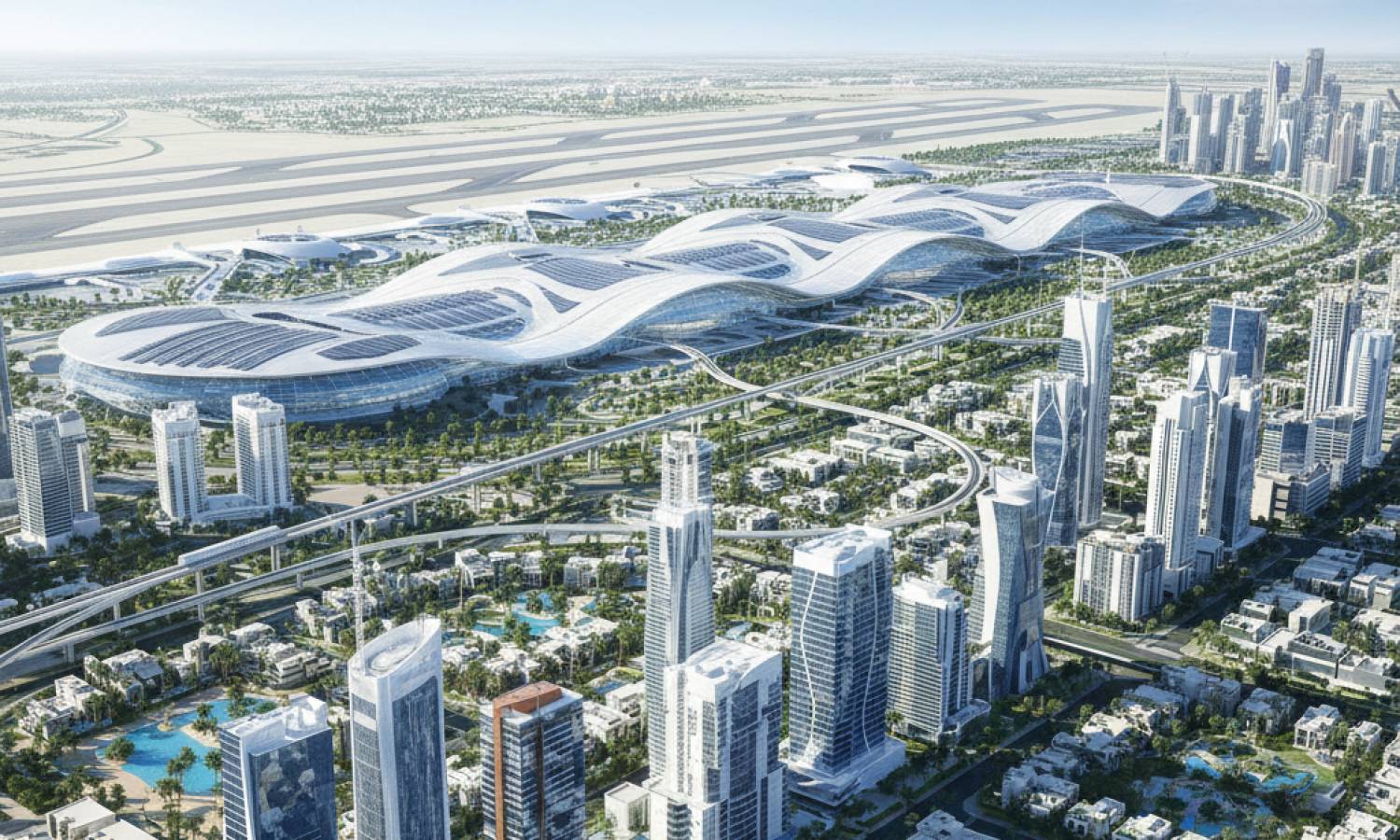
The Al Maktoum Airport expansion near Dubai South, expected to be the world’s largest in terms of passenger numbers with 260 million per annum at full capacity, is delivering significant price growth already in the offing areas. Year to date to end Q1’26 prices have appreciated by as much as 30% to 50% over the last three years in key offing locations off trade in the studios for AED 400,000 in 2022 increasing in value to as much as AED 550,000 to AED 650,000 prior to completion of airport.
It can also be noticed that metro additions to the existing network also have effects on the upsurge of values of areas which are in close proximity to the metro stations. Properties in the neighborhoods of Jumeirah Village Circle (JVC) and Dubai South for example continued to grow as a result of their connection to key employment locations in the city center which was facilitated as a result of Route 2020 metro extension. The newly introduced Blue Line metro will likely have a similar impact, with values of the properties which are in close proximity to the metro stations rising by as much as 10% to 20%.
But one of the up and coming locations on the East of Dubai’s city center is Dubai Creek Harbour – with new phases and projects releasing on to the property market this should see continued growth in both values as well as rental yield over the long-term. Dubai Creek Harbour currently is a relatively new residential waterfront alternative that has not as yet been ‘fully’ exploited in terms of property prices and thus comparable districts, currently trading at significantly higher average values than the creek harbor zone – such as the established apartments along the beach at Dubai Marina, offer investors huge scope and great long term potential for capital growth at slightly lower initial purchase price in comparison.
Buy post-announcement but pre-delivery. Even before a project is completed, the markets will have already fully priced in the benefits of infrastructure and, furthermore, the benefits of a completed project will typically be priced into the property within 2-5 years of completion. In addition to a property’s proximity to new metro stations, road improvements, facilities, and amenities, there are a host of fundamental factors, of which the key ones are the quality of the property, the track record of the developer, and liquidity of the completed property.
Development of the major roads within Dubai is also playing a supporting role to the emerging pockets of strong growth. Most notably, upgraded sections of Mohammed Bin Zayed Road have dramatically reduced travel times from key hubs in the southern part of the city, including Al Furjan and Dubai South. Rental demand into the established portfolio of apartments in these areas has consequently increased sharply. Meanwhile, the newly upgraded Al Khail Road that serves Dubai Hills and Business Bay has added value to the established property stocks within these very established communities, albeit to a lesser degree than the emerging infrastructure hotspots.
Practical Takeaways for Buyers & Investors:
- When an new infrastructure project is announced follow it to identify the best areas to invest in before the actual construction begins.
- Buy JVC to take advantage of its completed connection to the Metro to reap full benefits, as against areas along Blue Line route to be completed several years hence.
- The gains from metro connectivity in areas such as JVC have already been priced in; monitor the planned route of the Blue Line instead for fresh capital appreciation gains.
- Using DLD’s Oqood portal, verify developers’ past completion records and also try to avoid projects which have known history of late delivery in order to avoid having the appreciation caused by infrastructure not translating into actual value as developers’ miss their stated delivery timelines.
The Final Takeaway:
Dubai’s developing infrastructure will continue to alter geographical real estate demand and property prices while developing new geographical locations to invest and potentially higher capital appreciation while other locations will see a downward correction in values as existing primary locations are going to see a change in the values and may trade off at rerated secondary location values.
The new ‘property heat map’ as created by infrastructure projects will spell success for Dubai real estate in the years to come.