Real Estate Hotspots Near Al Maktoum Airport: Strategic Entry Points in 2026
With the capacity for over 260 million passengers by 2035, Al Maktoum International Airport will bring unprecedented long-term residential and commercial growth to the previously underdeveloped region of Southern Dubai. Therefore, given the expected upward surge in prices once full demand materializes, holding a position in the region is optimal now, in 2026, prior to take-off.
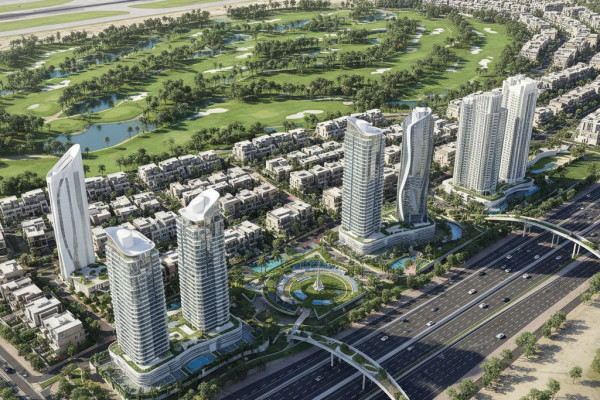
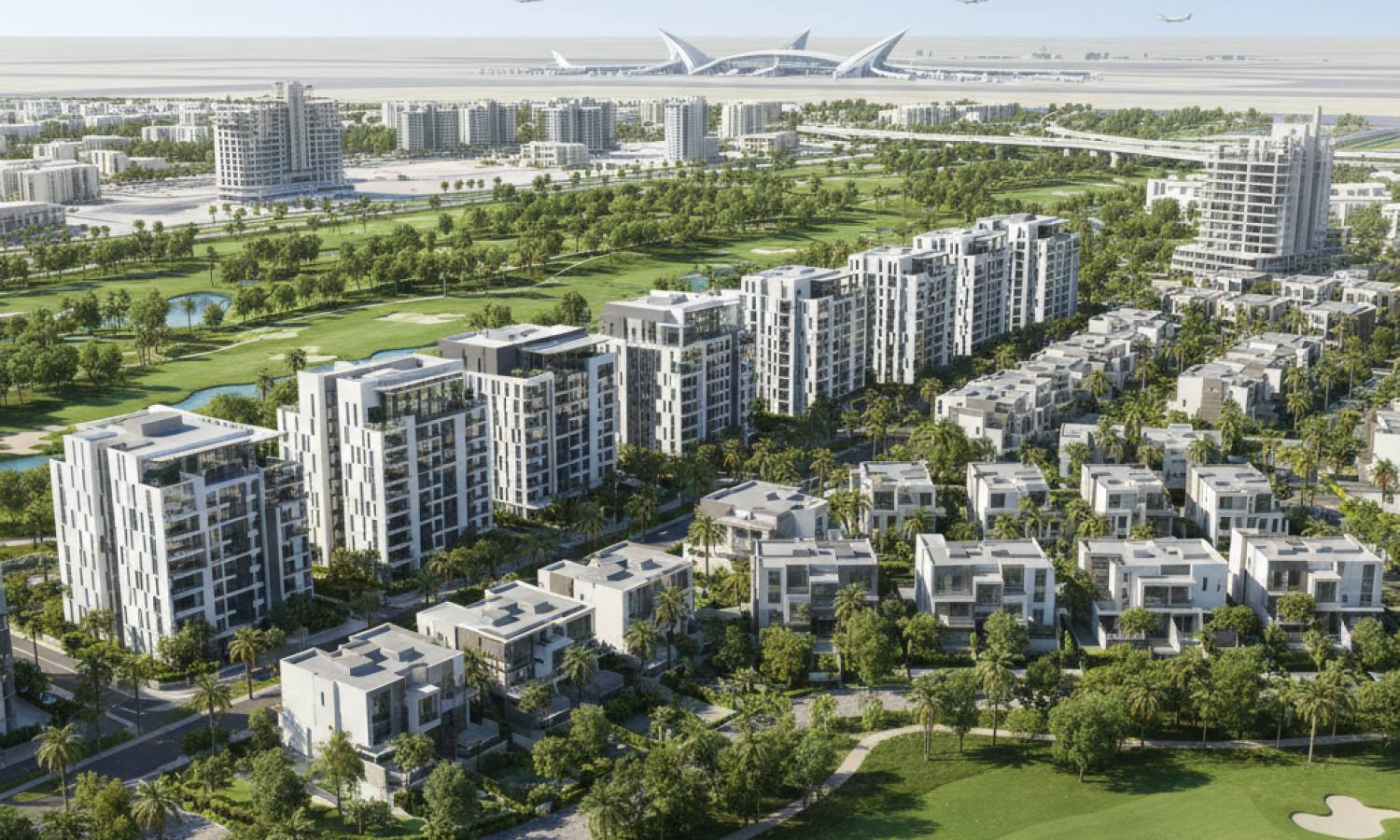
Within Dubai South, where apartments start from AED 550,000 or so, for quality established developments (i.e. that are already completed), prices have fallen. Demand drivers for such up-and-coming airport-side communities are still to fully manifest. After all, airport operational development is to increase over the next decade or so. Therefore, both townhouse-type apartments at Emaar South which is to boast a quality golf course which have (mid-range) price tag of c.AED 1.2m or so, provides an amenable and quality intermediate priced alternative for families wishing to purchase quality airport-side/airport corridor type realty that has a degree of space to spread out and for various other applications that are not typically realized from an equally-priced Arabian Ranches-based townhouse, for instance. But its not to imply, necessarily, that such developments offer superior yields, rather a new alternative open to various types of families interested in family-focused airport-side developments that possess a greater degree of space or specific type of external facets such as having a golf course outlook, for example.
Investors seeking a different lifestyle to that of new apartments in Dubai South will be pleased to learn of the various townhouses available at Emaar South. With golf course views to select from, mid-range priced townhouses at Emaar South for families will start from AED 1.2 million and will be ideal for families who cannot quite afford the premium priced villas in established areas such as Arabian Ranches yet require quality family housing located close to the airport corridor.
An alternative property for the investor who requires higher returns from his property investment and is worried about the full development risk are The Pulse and Urbana in Dubai South. These two apartments are established and have the advantage of existing tenants thereby achieving rental returns of 6% to 8% until full demand of the airport and its related projects materializes.
Although to date developers have predominantly focused upon areas of Dubai south of the airport, Jebel Ali has the potential to provide some of the more cost effective residential options available in the corridor, in particular as the node is enjoying a continued growth as a full residential area north of the airport in its own right, increasingly served well by a dedicated metro line connecting the area to the rest of Dubai and benefiting from the broad range of free zones including the Jebel Ali Free Zone.
A key area within the emerging corridor is Al Furjan; with a metro station that connects established Dubai to the airport area, and high demand from professionals who need a stable area with full infrastructure to live and work. Here, a 1-bedroom apartment would start from AED 600,000 and a townhouse from AED 1.2 million upwards, capturing tenant demand without the risks associated with less mature development.
However, the highest yielding stocks must be analyzed for their potential and the expected returns, modeled out for a realistic time period. Development companies often provide optimistic forecasts for their projects and the returns on investment for the off-plan stage. To this end, the yields on properties in new projects can reflect the fact that the properties are only partially occupied and that the time frame for the completion of the infrastructure is long.
To that end, the various aspects of a project must be scrutinized beyond just establishing a fair value for the property. As the buyer of a project, it is vital to first determine whether the project is licensed by RERA, and also to ensure that the developer has opened an escrow account should the project be off-plan, and finally to check the title deed (or Oqood registration) for the property.
What This Means for Your Portfolio:
- Invest in Dubai South for one-bedroom apartments at AED 550,000+ to make most from value growth before infrastructure and occupancy figures rocket by 2035.
- Use established residential to earn 6% to 8% in rental, while you amortize to develop cost in new projects (e.g. The Pulse and Urbana in Dubai South).
- Diversify your portfolio by choosing a property for rental income which is based in a metro line and close to airport employment opportunities such as Al Furjan for example. This will allow you to create a portfolio of rental income that has a diverse base of tenants which will have less risk of vacancies as airport businesses continue to grow.
- Check if the developer has the required licenses and verify the title deed or Oqood registration using Dubai REST and other registration and services tools provided by the Dubai Land Department and guides.
The growth of Al Maktoum Airport is not a short-term boom. Instead, the City is undergoing a decade-long transformation, and savvy investors can take advantage of a unique window to acquire some of the worlds hottest real estate before prices skyrocket. But timing is everything: Can one hold until the prices rise as anticipated, or should one sell some of the properties before airport growth is finally embedded in prices?
The growth of Al Maktoum Airport will create the largest development in Dubai. While this development growth will create a large development in the long term, similar to earlier airport-led real estate growth in the city, the timing, and rate of development, will create greater opportunities in diversified portfolio of investments if managed correctly. This will require a holding period until the returns on early staged airport-growth-access investments mature, and portfolio rebalancing to maximize returns on price increases when investments reach certain milestones and become more expensive.
The changes taking place in the southern real estate of Dubai are vast in scope as they pertain to a large area which is currently largely undeveloped and thus poses limited risk of diluting future gains through over extension as would be the case of attempting to capture a single wave of growth within a restricted geographical footprint. All in all, the smart investor would do well to recognize that the soon to be formed city of the future, Dubai South represents a new frontier in more than one sense, vast in scope and thus subject to its own unique developmental timeline that must be clearly understood to reap due reward.