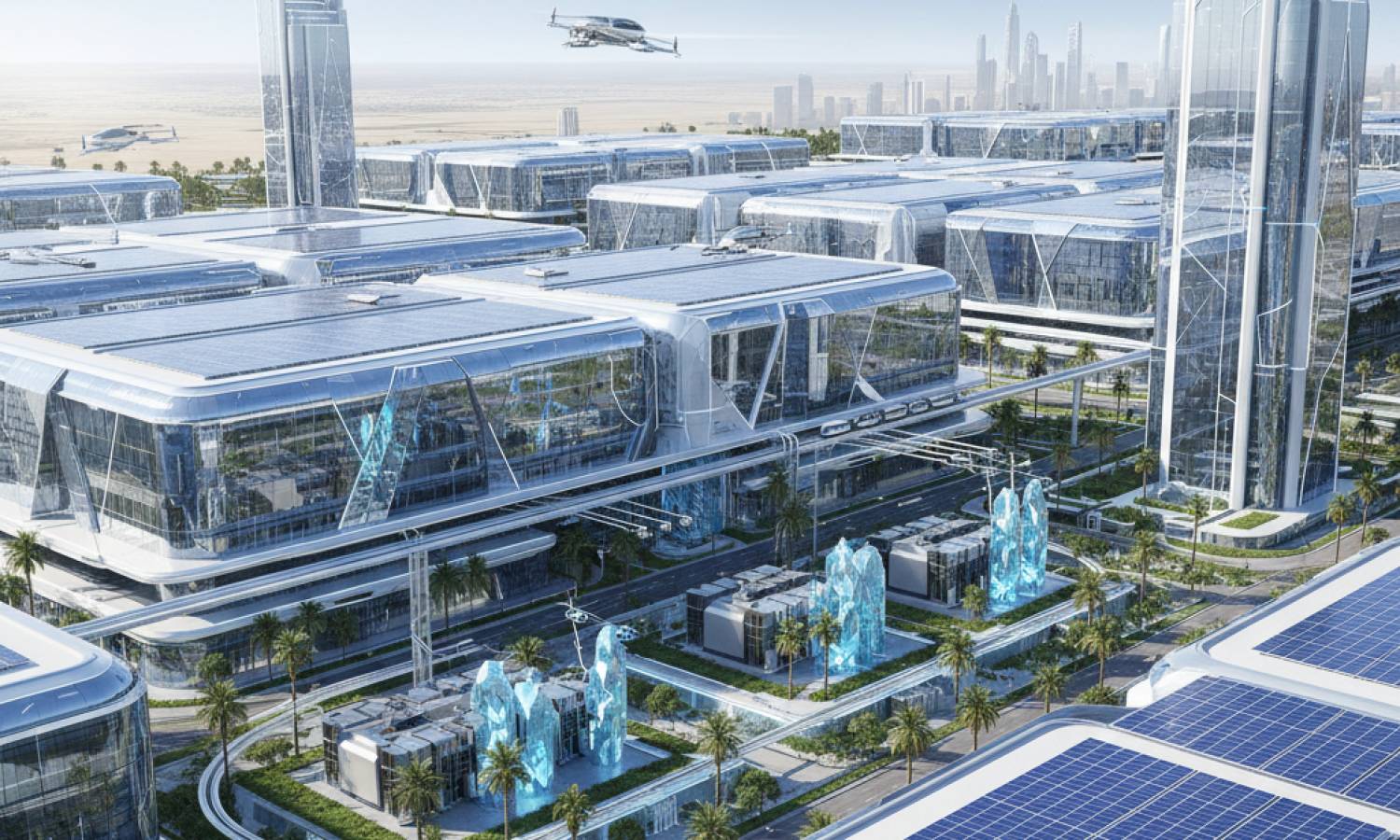
Power Play: How AI Is Reshaping Data Center Real Estate for Investors
The AI boom is more than just a tech trend. It’s forcing a drastic overhaul of real estate strategies for data centers across North America. Data center space demand rose 38% in 2025 — a new high, and a fourth consecutive year of upward-trending lease rates. Tech infrastructure real estate investors, take heed.
For the first time in several years, Northern Virginia retook its title as the largest data center market in terms of demand. The region absorbed more than 1,100 megawatts (MW) of new projects — nearly twice as much as the 570 MW absorbed in Northern Virginia for the same period in 2020. The region’s data center inventory is now over three times that of any other secondary market, so it’s clear where investors believe the largest opportunities will arise in the years ahead. What’s more, this surge in demand is clear evidence of a problem that isn’t new, but has become increasingly urgent: the region’s supply isn’t keeping up with demand.
When it comes to data centers, the power grid rules. In the hyperscale world of high performance computing and AI, no one has time to wait for power — so getting to the land is half the battle. Construction slows down for the first time since 2020, due to increasing permitting delays and capacity constraints on infrastructure.
A growing number of companies are now eyeing emerging markets like Atlanta and Dallas-Fort Worth, which in recent years have been able to provide more flexible land and power resources. These are now becoming prime spots for deploying new AI projects as more companies look to deploy AI at the edge closer to population centers. Atlanta alone has more than 2,000 MW under construction. That’s just as much as has been built in Northern Virginia so far.
So here is the takeaway. The rules of the real estate game have changed. Technology and the location of data centers are far more significant than more traditional location factors such as access to water or proximity to the city center. In fact the availability of power and the readiness of a site for connection to a data center are now highly relevant real estate characteristics. Investors who have been watching the growth of the technology-focused developments in Dubai, such as Distria and Smart Heights, or are following some of the new build projects in the emirate may be interested to know that the North American data center business model provides a valuable guide as to where the smart money will be looking to invest next.
Practical Takeaways for Buyers & Investors:
- Green buildings with reliable and quality power supply will be the new benchmark for all data-centric real estate projects going forward.
- Keep an eye on emerging tech hubs with flexible permitting and land availability, as these open markets reduce risk and offer growth potential.
- Analyze lease rate momentum across markets: Rapidly increasing lease rates from one year to the next point to the strongest demand and potential for rental growth.
- More than just geography: When thinking about where to invest in technology consider also proximity to large populations. - latency in #AI is important and location counts.
A New Frontier in Real Estate Investment
What happens when a revolutionary technology bursts into the modern world and suddenly everything changes? We already know that Artificial Intelligence (AI) is literally changing the world of technology and is having a profound effect on where and how we invest in real estate. Understanding power and emerging markets is crucial for the smart money in play now who wish to profit in the next upswings of the economy that will fall well beyond the conventional downtown core or industrial lands.